Reading notes
Aion: Researches into the Phenomenology of the Self
The Odyssey
The Iliad
Read the note
I’ve decided to start reading ancient European classics since I think I know more about Asian history than European, and I want to understand how ideas from classical antiquity have influenced and shaped modern Western philosophy.
I greatly enjoyed the (audio)book. Although at the start during the catalogue of ships, I would zone out for 5 minutes, snap back into focus just to think “how is this still going?”, by Achilles’ return I was on the edge of my seat.
I like the theory that the gods and divine forces represent various elements of Achilles’ psyche (ie Athena as reason/self-control, Zeus as sovereignty, Apollo as retribution), as at the time, there was no theory for a unified self. In the context of the evolution and bases of Western thinking, its intriguing to imagine how pulling out these aspects of the psyche allowed philosophers and poets to dissect and examine the human condition long before any cohesive theory of mind was established.
While some themes from the Iliad have clearly been eroded due to clashes with rationalism and monotheism, many endure. Achilles’ heroic excellence (arētē), divine wrath (mênis) and tragic end (telos) echo in time through Aristotle, Nietzsche and Kierkegaard, framing human striving as noble yet doomed. The battle of fate vs. agency is revisited by some of the West’s greatest thinkers and writers in stoicism, Christianity, Enlightenment free will and compatibilism. The ideas of honour and reciprocal justice preceded natural law, the social contract, and the shift from shame to guilt-based justice which comprise much of our modern legal system. Achilles’ wrath, while externalised, represents a psychic fracture which forms a foundation of Homeric psychology, influencing emotional ethics and cognitive therapy.
It is difficult to tell if war is used as a plot device in The Iliad to explore the psyche, or if it genuinely is a story about war - in the frame of which the aforementioned ideas fit so naturally - and war has shaped and built Europe so much that psychological aspects of it permeate our modern doctrines. Although I may be overstating authorial intent as Homer was realistically a performative collective. In my opinion, the rituals, entropy and telos of war are, while important in their own right, used to explore the sacred order and the tragedy of hubris and mênis.
The role of ritual in the Iliad can also be examined against millennia of Western thinking. Achilles uses ritual to bargain with fate and the gods - but in a reading where those represent aspects of his internal struggle, he is really bargaining with himself. In this frame, Homer’s rituals become very Jungian, as they are used to understand and channel the subconscious. While less fatalist, I could draw the same parallels to many religious rituals. Zen chadō - traditional Japanese tea ceremony - is not just about tea, but about attunement to and quieting of the subconscious. Alternatively, the Eucharist deals with eschatological redemption. If we see fate as chaotic and cold, the thread tying all these rituals together is that they rebel against fate, and in doing so, provide us with meaning.
It is for this reason that I believe one of the biggest tragedies in the modern world is our hubristic rejection and scapegoating of ritual and tradition. As a society, we foolishly believe we have transcended the limitations of our progenitors, and thus have no need to play the games they did. Ironically, this ‘transcendence’ does not do away with ritual all together, but replaces sacred, natural traditions focused on providing meaning through suffering, catharsis, and conquering the Self, with commodified, perverted simulacra à la René Girard’s sacrificial crisis. We now worship algorithms, empty consumption, and isomorphic belief systems. In our attempts to unshackle ourselves from collectivism and tradition we have amplified ressentiment and slave morality. We are not the Übermensch - we are the Last Man.
The Art of Seduction
Read the note
I feel a mixture of repulsion and admiration when reading Robert Greene.
I detest the way he frames human relationships as zero-sum power games, where you befriend or court people in order to get something out of your ‘victim’. This couldn’t be more antithetical to my worldview.
That being said, his observations on human nature are remarkably perceptive. My reaction to the vast majority of points he made was either “that’s so true” or “I’ve been doing that without even realising”. I especially liked his ‘anti-seducer’ archetypes - everyone knows a clingy or cheap guy is unattractive, but his reasoning as to why this is was psychologically profound, and more discerning than any other explanation I’ve heard.
In a way, I find it distasteful to have this kind of information in a matter-of-fact, centralised repository that anyone can pick up and attempt to emulate. These insights should each be hidden in their own novel or poem, requiring considered reading and reflection to discover the author’s commentary through their characters and abstractions. This book is genuinely an infohazard for anyone picking it up hoping to get better at flirting, being in a relationship, or just understanding other people.
Initially, I had a minor crises reading this, as I wondered if agreeing with and realising I often (unknowingly) deploy Greene’s tactics meant I was a manipulative, Machiavellian person. I think a good way to understand the text is to think of it as a psychopath’s guide to emulating what comes naturally to someone who is charismatic, outgoing and interesting.
I also found it amusing that the book is basically an academic version of the D.E.N.N.I.S. system from It’s Always Sunny.
I’ve rated the book a 5 - 10 for psychological insight, 0 for humanity.
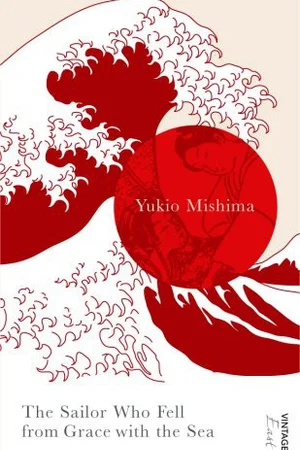
The Sailor Who Fell From Grace with the Sea
Read the note
An interesting and well-crafted novel, though its meaning isn’t immediately clear - at least in English.
With no prior knowledge of Mishima, the book might read as a nebulous warning against dispassion, youthful arrogance, the pursuit of glory, and rebellion against domestication. Understanding Mishima’s life and how he speaks through his characters - particularly Noboru - reveals something more disconcerting. Rather than condemning these ideas, he endorses them, presenting their ‘consequences’ not as tragedy but as fate asserting itself as it should.
I kept waiting for Noboru to be met with some grand consequence for being coerced by The Chief into cruelty and hubris. It was only with 10 pages left - on the edge of my seat, waiting for the twist - that I realised there would be no repercussions. In Mishima’s worldview, the mundanity and inertia of post-war Japan is evil, while violence, rejection of conventional morality and self-sacrifice in the name of glory are truly heroic.
For me, this made the novel more compelling. Mishima’s ability to articulate ideas that are widely unpalatable to modern society with such artistry and conviction is rare and exhilarating - but it certainly isn’t for the faint-hearted.
A side note: one of the most striking cultural contrasts when visiting Japan is how frequently people offer polite apologies for even minor inconveniences. In The Sailor, not a single character apologises. This is no accident - Mishima clearly saw modern social norms, particularly the expectation to suppress oneself for the comfort of others, as contemptible.
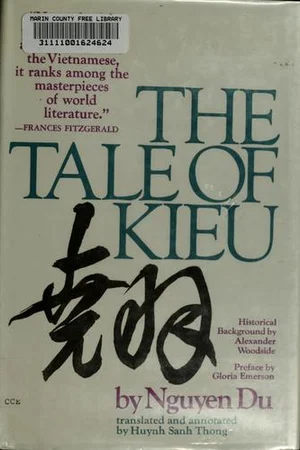
Truyện Kiều (The Tale of Kieu)
Read the note
I bought this book when I got back from Vietnam. I had such a great time and wanted to learn more about the country, and saw this was considered the seminal work of Vietnamese literature. Given that information, I was surprised to find out The Tale of Kieu is an adaptation of the Chinese Jin Yun Qiao. There is clearly an imprint left from millennia of direct and indirect Chinese influence, especially in the north, but I didn’t expect the Vietnamese epic to be a Chinese story. Further research showed that the act of taking a Chinese work, reforming it to reflect Vietnamese culture and ideas, and going ‘see? we made it better’ is, in fact, a strong embodiment of the Vietnamese spirit.
While reading, I was also surprised by how harrowing and merciless the world is to Kieu. Some struggle is necessary for a good epic, but this was relentless. And again, the idea that this represents the Vietnamese spirit was unexpected to me. It took until the end to see that the story is not one of suffering, but one of resilience, hard-won dignity and stubborn persistence - and looking at Vietnamese history (even including the 200 years since the poem was written), you can easily see why those traits are highly valued. Growing up in a western country, the idea that one should accept and endure hardships in hope fate will eventually smile on them is not something I live by. I immediately want to fight any problem I have head on. It is clear that for people in many parts of the world and history, that is not an option. The only path is to endure it, make sacrifices, and persevere. While that contradicts my personal philosophies, I do find it beautiful in a melancholic way.
The most impressive aspect of the poem, for me, was how Du captures the tension and conflict between Buddhism, Confucianism and the human condition. Kieu’s sacrifice for her father embodies Confucianism - by honouring her duty to her family and hierarchy, she is doing ‘the right thing’ but subjugating herself to a life of suffering in the process. Her acceptance of her brutal fate is a Buddhist tenet, and Buddhist themes of suffering, karma and cycles are woven throughout the poem, but there are also elements of defiance and depth that lead the reader to question if it is just for a virtuous and talented women to accept a life of suffering because it is what heaven wills.
Kieu’s love, rage and dreams embody her humanity. Her romantic passion competes with her Confucian filial piety, her refusal to resign herself completely to suffering questions Buddhist detachment. In hindsight, it is absolutely astounding how Du was able to weave these themes throughout the narrative in such a natural, authentic manner. I like that this doesn’t come across as a critique or judgement of any of those ways are thinking, but rather explores the complicated nature of navigating life and hardship with all those factors in mind. With Kieu ultimately being rewarded for her sacrifices and endurance of suffering, I read the novel as an affirmation of these philosophies and an ode to Vietnamese values and beliefs. I absolutely now see why this poem is so important to Vietnamese heritage and culture.
It’s a shame I don’t speak Vietnamese - I’m sure this would have been even better in the original lục bát structure.